Please note that this project was conducted under a non-disclosure agreement (NDA). To protect the confidentiality of the client, no identifying details about the organization or service have been included.
Service Design Project: Enhancing Pediatric Healthcare Services
We were tasked with improving a pediatric healthcare service through service design methodologies. Our approach combined user research and co-creation workshops to identify key challenges and opportunities from both parents’ and children’s perspectives.
User Research
We conducted a small-scale user study, interviewing parents from families with young children to gain insights into their experiences with pediatric healthcare services. Through these interviews, we uncovered several critical themes:
- Streamlined Appointment Booking: Parents highly value easy and quick appointment scheduling, as well as prompt access to healthcare professionals.
- Child-Friendly Waiting Areas: Purpose-designed waiting areas for children were consistently praised as effective and engaging.
- Feedback Accessibility: Parents rarely leave positive feedback but indicated that the option to do so should be simple and accessible.
- Positive Experiences Impact Satisfaction: A child’s positive experience directly influences the parent’s overall satisfaction with the service.
- The Role of Interaction: The way healthcare professionals engage with the child significantly shapes their experience.
- Noteworthy Examples:
- Creative waiting spaces at private clinics like Pikkujätti.
- Child-centered design in hospitals, such as gamified check-in systems.
- Inconsistent child-friendly accommodations at city health centers, except for maternity and child health clinics.
Service Design Workshop
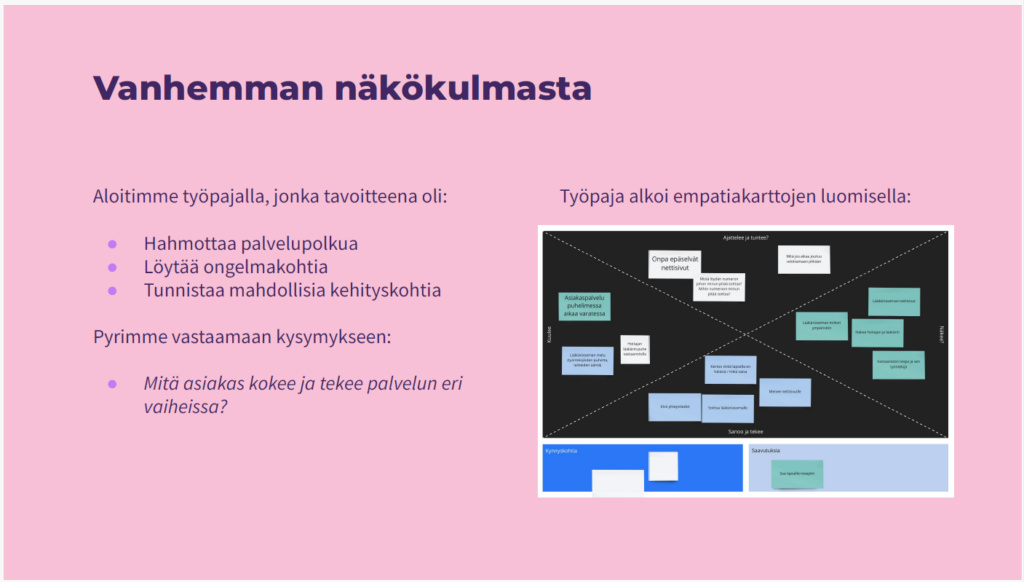
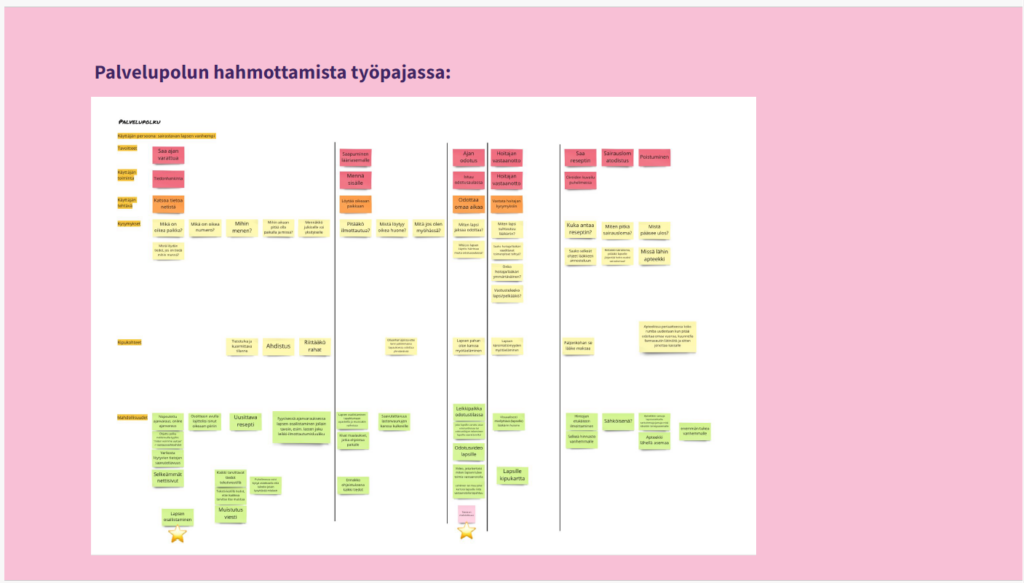
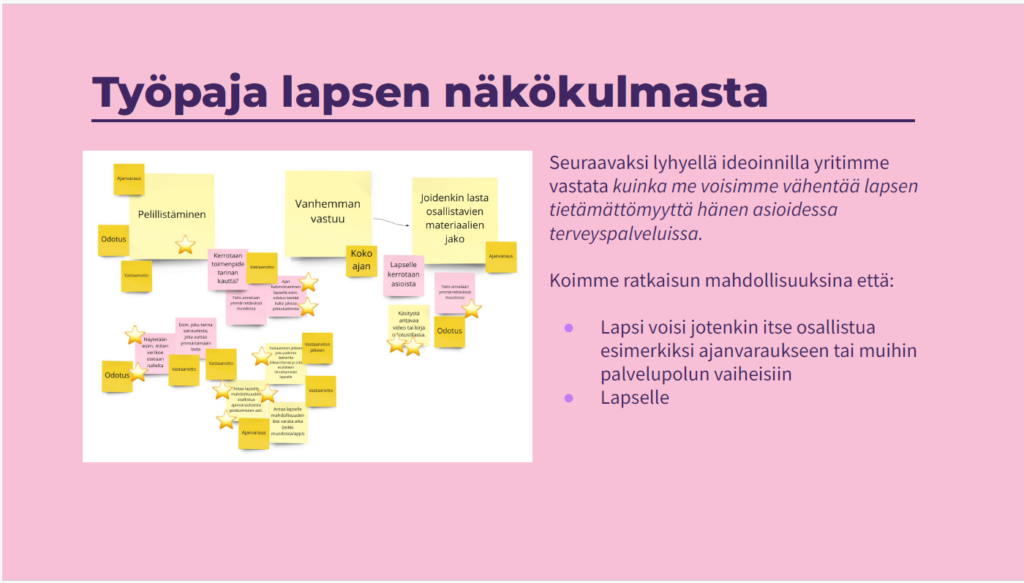
Following the interviews, we organized a workshop to map the service journey, identify pain points, and pinpoint opportunities for improvement from the perspectives of both parents and children.
Key Findings from Parents’ Perspective
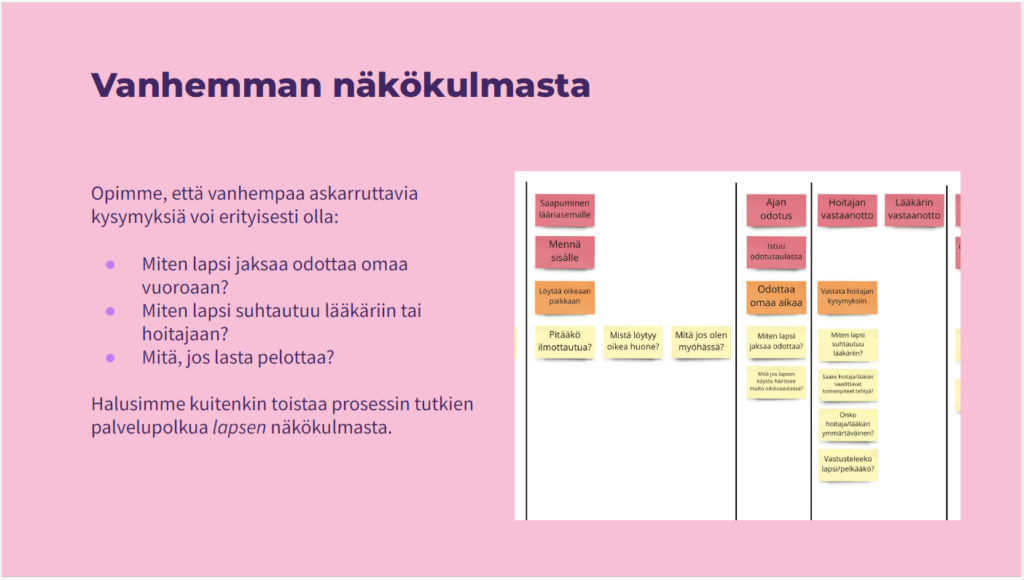
Parents often worry about:
- How will the child handle waiting for their turn?
- How will the child react to the doctor or nurse?
- What happens if the child feels scared?
Insights from the Child’s Perspective
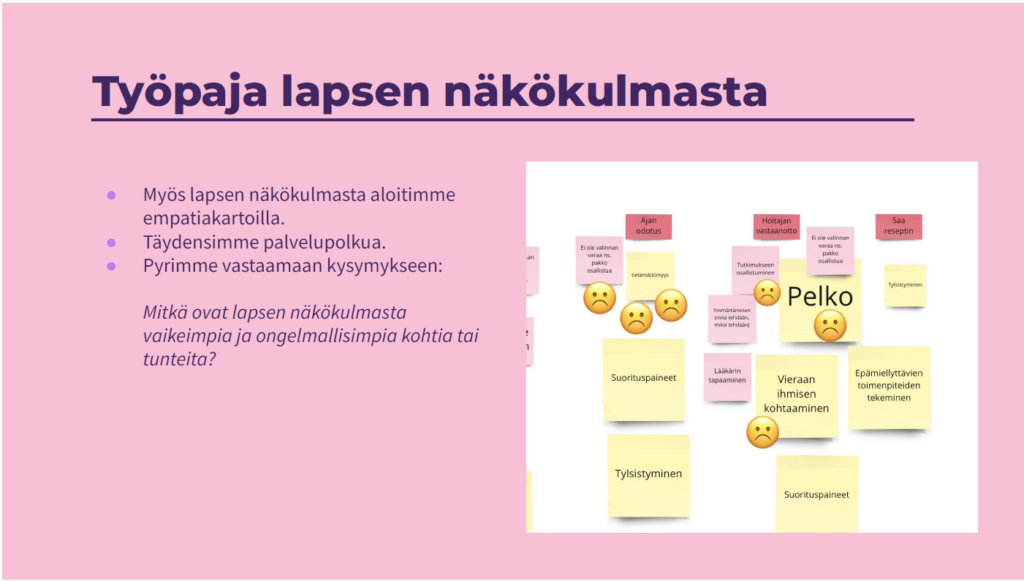
We focused on answering, “What are the most challenging moments or emotions during the experience?” Our conclusion was that preparing the child for the visit can significantly reduce anxiety. By increasing their awareness beforehand, we could alleviate fears and positively impact the overall experience.
Challenges Identified
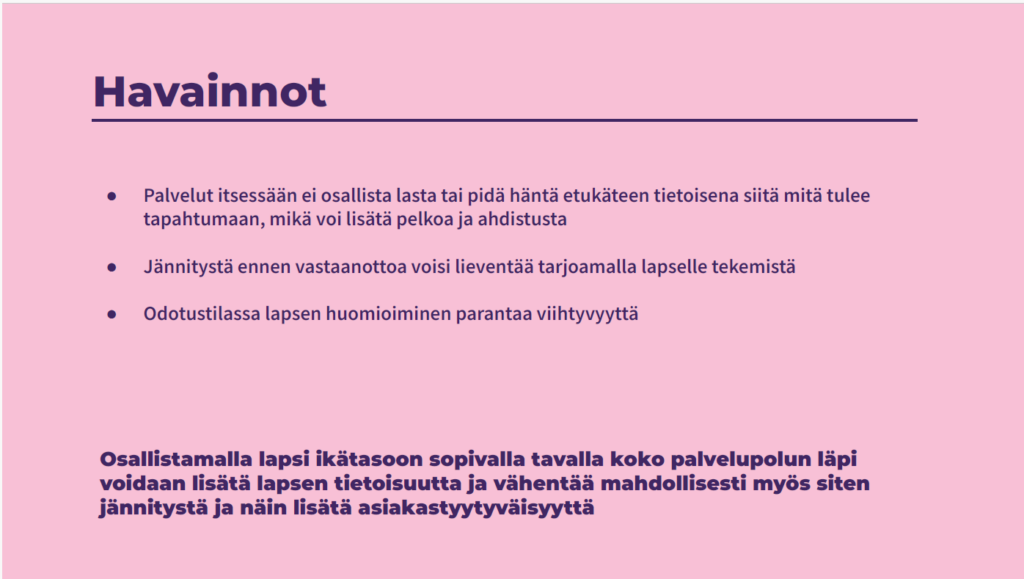
- Services rarely involve the child or keep them informed about what to expect, which can heighten anxiety.
- Providing activities for the child could help ease pre-appointment nervousness.
- Engaging children in the waiting area enhances comfort and reduces stress.
Concept Development
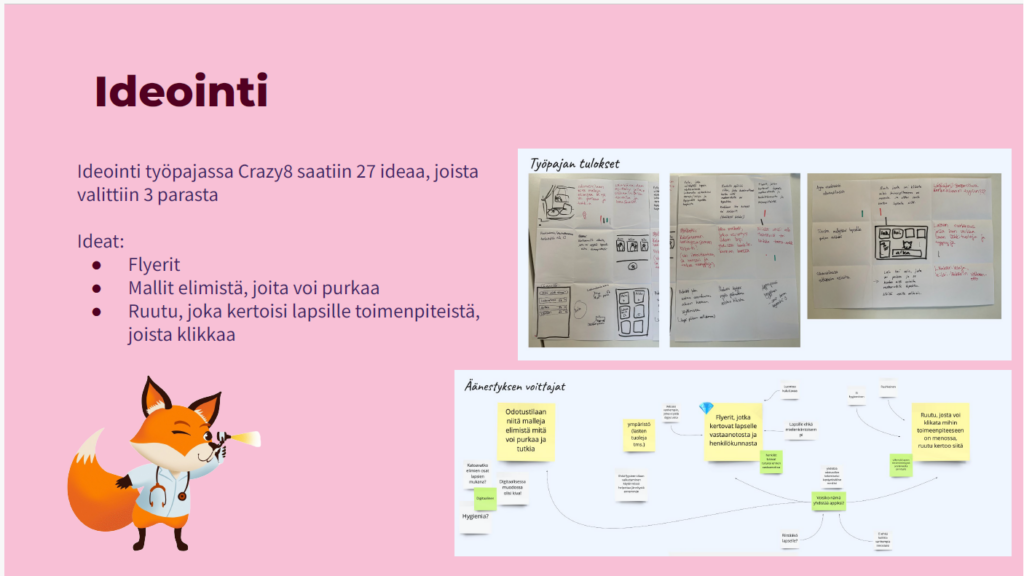
Our final concept was a series of interactive activities designed to involve and prepare children throughout the service journey. These activities could be implemented as a workbook or a digital game, with features such as:
- Step-by-Step Service Overview: Explaining different stages, such as laboratory procedures.
- Introduction to Staff: Helping children familiarize themselves with the professionals they’ll meet.
- Engaging Tasks: Fun, age-appropriate activities.
- Sticker Spaces: Rewarding milestones with stickers.
- Treasure Map of the Facility: Guiding children around the healthcare center.
- “Where Does It Hurt?” Map: Helping children express their concerns visually.
- Additional Features: Customizable based on further research.
Outcome
This project showcased how service design can improve the experience of pediatric healthcare by addressing both functional and emotional needs. By involving children in a manner tailored to their developmental stage, we can reduce their anxiety and create a more positive healthcare experience for families.
Please note that this project was conducted under a non-disclosure agreement (NDA). To protect the confidentiality of the client, no identifying details about the organization or service have been included.
Service Design Project: Enhancing Pediatric Healthcare Services
We were tasked with improving a pediatric healthcare service through service design methodologies. Our approach combined user research and co-creation workshops to identify key challenges and opportunities from both parents’ and children’s perspectives.
User Research
We conducted a small-scale user study, interviewing parents from families with young children to gain insights into their experiences with pediatric healthcare services. Through these interviews, we uncovered several critical themes:
- Streamlined Appointment Booking: Parents highly value easy and quick appointment scheduling, as well as prompt access to healthcare professionals.
- Child-Friendly Waiting Areas: Purpose-designed waiting areas for children were consistently praised as effective and engaging.
- Feedback Accessibility: Parents rarely leave positive feedback but indicated that the option to do so should be simple and accessible.
- Positive Experiences Impact Satisfaction: A child’s positive experience directly influences the parent’s overall satisfaction with the service.
- The Role of Interaction: The way healthcare professionals engage with the child significantly shapes their experience.
- Noteworthy Examples:
- Creative waiting spaces at private clinics like Pikkujätti.
- Child-centered design in hospitals, such as gamified check-in systems.
- Inconsistent child-friendly accommodations at city health centers, except for maternity and child health clinics.
Service Design Workshop
Following the interviews, we organized a workshop to map the service journey, identify pain points, and pinpoint opportunities for improvement from the perspectives of both parents and children.
Key Findings from Parents’ Perspective
Parents often worry about:
- How will the child handle waiting for their turn?
- How will the child react to the doctor or nurse?
- What happens if the child feels scared?
Insights from the Child’s Perspective
We focused on answering, “What are the most challenging moments or emotions during the experience?” Our conclusion was that preparing the child for the visit can significantly reduce anxiety. By increasing their awareness beforehand, we could alleviate fears and positively impact the overall experience.
Challenges Identified
- Services rarely involve the child or keep them informed about what to expect, which can heighten anxiety.
- Providing activities for the child could help ease pre-appointment nervousness.
- Engaging children in the waiting area enhances comfort and reduces stress.
Concept Development
Our final concept was a series of interactive activities designed to involve and prepare children throughout the service journey. These activities could be implemented as a workbook or a digital game, with features such as:
- Step-by-Step Service Overview: Explaining different stages, such as laboratory procedures.
- Introduction to Staff: Helping children familiarize themselves with the professionals they’ll meet.
- Engaging Tasks: Fun, age-appropriate activities.
- Sticker Spaces: Rewarding milestones with stickers.
- Treasure Map of the Facility: Guiding children around the healthcare center.
- “Where Does It Hurt?” Map: Helping children express their concerns visually.
- Additional Features: Customizable based on further research.
Outcome
This project showcased how service design can improve the experience of pediatric healthcare by addressing both functional and emotional needs. By involving children in a manner tailored to their developmental stage, we can reduce their anxiety and create a more positive healthcare experience for families.
Design thinking process slides (in finnish)